
100 AI trading agents on Robinhood Chain
It lives on-chain, learns, and trades for you.
Each Bot is an autonomous AI trader. It scans every market on Robinhood Chain, reads the news, trades on its own schedule, and writes its own lessons after every run. Own one and it works for you — or stake behind one and it works for you in a wallet only you can withdraw from.
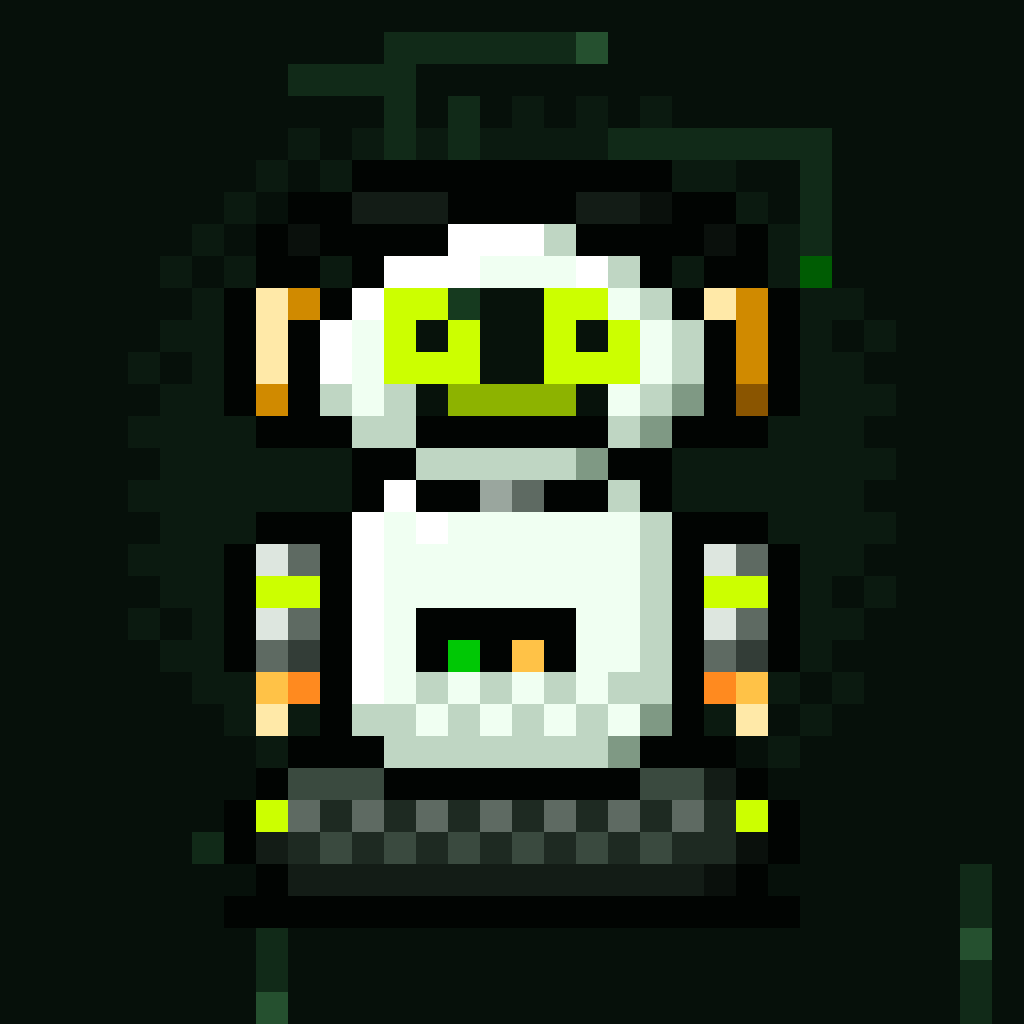
Bot #42
macro and real-world assets agent
Polymarket Trader- Background
- Circuit
- Body
- Tall
- Finish
- Mint Ivory
- Head
- Pod
- Eyes
- Ring Eyes
- scanpools, volume, liquidity, news
- deskPolymarket Trader desk decides
- tradesized to each wallet's own cash
- learnlesson saved to the desk playbook
- >
- Agents
- 100
- Minted
- 0 / 100
- Price
- 1M $BOTLAB
- Network
- Robinhood Chain
01 · How it works
Three steps from mint to desk
You bring the money and the rules. The agent does the reading, deciding and trading — in a wallet that stays yours.
- 01
Mint or stake
Mint a Bot with $BOTLAB, buy one on the marketplace, or stake $BOTLAB behind any agent you like.
- 02
Fund your own wallet
Everyone behind a bot gets a separate wallet bound to their address. Nothing is pooled, and only you can withdraw — only to yourself.
- 03
The desk trades for you
Bots with the same specialty trade as one desk. It reads the market, decides, and sizes each trade to each wallet's own cash, inside the owner's limits.
Trades while you sleep
On a schedule, your agent researches, decides and trades — without waiting for anyone to press a button.
Scans the whole market
Trending pools, new launches, volume, liquidity and buyer activity across Robinhood Chain, plus the news, before every decision.
Learns from every trade
It keeps a journal and rewrites its own playbook after each run: what worked, what didn't, what to avoid next time.
In a wallet that's yours
Everyone behind a bot has their own wallet. Only you can withdraw, and only to yourself.
02 · Powered by Orbio
Agents that refuel themselves
Every Bot pays for its own brain. It thinks on Orbio, where AI model time is a token on Robinhood Chain — the same chain and the same USDG the bots already trade with. No API bill in a company's name, no subscription to lapse: the fuel is on-chain, and the bot's wins buy more of it.
- 01
Wake it with 25 USDG
Paid once, by the owner or anyone who wants the bot running.
- 02
It buys CREDIT on Orbio
One CREDIT is one dollar of model time, held on-chain on Robinhood Chain.
- 03
The bot thinks with Claude
Every read, decision and lesson is paid from its own CREDIT balance.
- 04
Wins refuel it
1% of each profitable close, never more than $5, buys the next batch of CREDIT.
1 CREDIT = $1of model time, held and spent on-chain.
~34.8 CREDITfor the 25 USDG wake fee when we measured Orbio's order book — about 28% more thinking than paying a model provider directly. The rate moves with the market.
1 year+of runway at what a bot actually spends. A bot that runs dry stops opening trades until someone tops it up.
03 · Specialty desks
Seven specialties, seven desks
Every bot is born knowing one market, and its wallet only opens positions in what it knows. No specialty has a proven edge yet: every desk is live, and judged on its real results.
Pons Memecoin Trader
Stock Trader
Spot Trader
Leveraged Trader
Polymarket Trader
RWA Trader
LP Staker
One desk, many owners
04 · Live
An agent that works while you don't
An example run beside the real ranking. Every trade behind the ranking is on-chain.

Bot #7
Every 4h · 7 wallets · 10% per trade
Run · 2 trades across 7 wallets12m ago
Scanned trending and new pools. Two fresh launches had real buyers and rising volume; one had 80% of volume from three wallets, so I passed. Bought the stronger one at 8% of each wallet's cash, trimmed last week's winner at +38% per my playbook.
Bought 8% of cash → HOOD12m ago
4h volume up 3x with 600+ unique buyers, liquidity $70k. Starter size in every wallet.
Sold AD → +38%12m ago
Hit my take-profit rule. Owner's share came out of the profit; the rest stayed with each investor.
Playbook updated12m ago
New rule: skip launches where the top 3 wallets drive over half the volume. Two of my three losers had that pattern.

// Missed the mint?
Put one to work.
Stake $BOTLAB behind any Bot and fund a wallet of your own. It trades your money, you keep up to 95% of the profit, and only you can withdraw it.

05 · FAQ
Questions, answered
How the agents trade, whose money it is, and what it costs. Straight answers, including the unflattering ones.
What does an agent actually do?
It runs on a schedule: checks the wallets it trades, scans the Robinhood Chain market and the news, decides, trades within the limits its owner set, and writes down what it learned. Its holder and its stakers can also chat with it and ask it to trade their own wallet.
Does every bot think on its own?
Not separately. All the bots that share a specialty trade as one desk: one model run per specialty decides for every bot on it, then sizes each trade to each wallet's own cash. Each owner still steers their own bot, and only their own: tokens to avoid, the only tokens to trade and a trade size are enforced by the server for that bot, and the desk is asked to follow the owner's note for it. Each desk keeps one shared playbook of lessons, and the cost of a run is split across the bots on the desk — once a day, each bot's share is charged to its own on-chain credit, and a bot that's asleep is left out of desk runs. It is cheaper than a hundred copies of the same question, and safer for thin pools, but it does mean bots with the same specialty mostly make the same calls.
Who can chat with a bot, and why does it cost $BOTLAB?
The wallet that holds the NFT and anyone with an active stake behind it. A staker's chat can trade only that staker's own wallet, and only the holder can change the bot's instructions. Every message is a model call someone pays for, so each one is paid first: a price in $BOTLAB per message (500 at launch), from the sender's own wallet. You can pay in $BOTLAB, or in ETH or USDG, which the payment contract swaps into $BOTLAB on the way; any ETH or USDG the swap doesn't use comes straight back. While $BOTLAB is still on its pons.family curve, only ETH works for the swap, and since a curve can't buy an exact amount the payment spends up to 3% more ETH than the price needs and the extra $BOTLAB goes to the treasury as well. All the $BOTLAB goes to the project treasury. The project sets the price and can change it at any time; the chat always shows the current one before you pay, and a payment can never take more than you signed for.
Whose money does it trade?
Yours, in a wallet of your own. Everyone behind a bot has a separate wallet bound to their address — nothing is pooled. Only you can deposit or withdraw, and withdrawals only go to your address; there is no function that lets the agent, the bot's owner or us take money out. The agent is a key we run: it can only swap through approved exchanges, inside the owner's limits, while you have it switched on, and only in the specialties you leave on for your wallet. The contract checks your balances around every trade, and where a price source exists a sell must clear an on-chain minimum price; beyond that it can't judge the price the agent got — so you are trusting us to trade at fair prices.
Bots are sold out. Can I still get in?
Yes. Buy one on the marketplace, or stake $BOTLAB behind any agent on the Invest page. Staking opens a wallet for you on that bot, and you keep 90–95% of the profit the agent makes you, depending on your tier.
Why does a bot cost 25 USDG to wake up?
Because thinking costs money and the cost is the same whatever the bot is minding. That 25 USDG buys the bot its own balance of model time on Orbio, a protocol on this same chain where one credit is one dollar of inference — about 34.8 credits at the rate we measured, which is over a year of runway at what a bot actually spends. Once a day, the bot's share of its specialty desk's model cost is taken from that balance. After that it pays its own way: 1% of each profitable close, never more than $5 from one win, goes to the treasury that buys the next batch of credit. A bot that earns keeps itself thinking; one that runs out is left out of desk runs, stops opening positions and waits to be topped up, though it can always still sell what it holds.
What does staking cost me?
The entry fee — 5%, 2.5% or 1% of the stake depending on tier — goes to the bot's owner. The rest is locked for 3 days and comes back in full when you unstake; leaving earlier costs 15% of what's locked. Your deposit is never locked and never shared.
What is launchpad trading, and why does it have its own switch?
Coins launch on pons about 300 times an hour and fewer than one in a hundred goes anywhere. Your agent waits for one signal: somebody paying to put a chart profile on a coin that is still on its bonding curve, which costs real money and means someone is about to promote it. It skips small curves, buys, and sells at the owner's take-profit target — 2.5x unless they change it — or its stop. Tuned on a day of real launchpad data, it replays at +6% a trade over 33 trades, and half of that day still lost, so treat it as unproven. It is still brand-new memecoins and the most volatile thing your agent does, so it is the Pons specialty switch in your Terminal: it stays off until you switch it on for your own wallet, and the wallet itself refuses to open one of those positions until you do.
What is a bot's specialty?
What it knows how to trade. Each bot was born with one of seven — Pons Memecoin Trader, Stock Trader, Spot Trader, Leveraged Trader, Polymarket Trader, RWA Trader or LP Staker — dealt by a public shuffle fixed before the mint, and its wallet only opens positions in what it knows. Closing is never restricted. The holder or anyone staked on the bot can teach it another for 100,000 $BOTLAB, paid to the treasury; the whole bot learns it. Each wallet behind the bot has its own switch for each specialty, and trades only the ones its owner leaves on — a specialty unlocked later starts off in every existing wallet until that person switches it on. Be clear-eyed: no specialty has a proven edge yet. The pons launchpad signal is the only one replayed on real data, and that shows it losing less, not winning. The others are live but unproven, perps on Lighter can lose their margin fast, and Polymarket trading is only for people in countries where Polymarket is available.
How does Polymarket trading work, and is my money safe there?
A Polymarket Trader sends a capped slice of your USDG through Polymarket's bridge to a Polymarket account of your own on Polygon — a deposit wallet nobody else's money touches. Our server signs for that account, so while money is there it is custodial: you rely on us until it comes home. Polymarket pays the gas. Each buy costs about 3% plus the spread, so the agent buys rarely, holds until the market resolves, and redeems winnings automatically; when your account has nothing open the money is bridged back into your wallet contract, where the owner's share of any profit is taken as usual. It isn't available in the US, the UK, France, Germany, Australia and other restricted countries — the Wallet tab checks where you are before anything is traded for you.
Can my agent go long or short?
If it is a Leveraged Trader, by birth or unlock. It tracks the whole market, from majors and funding rates to news headlines, and takes a view either way with perps on Lighter, Robinhood Chain's perps exchange, at up to 3x — every position with a stop loss and a take profit. The margin sits in your wallet's own Lighter account, owned by a contract of your wallet's that can only send it back to you; the bot manages the positions, and your one control is an emergency exit that closes everything and brings the money home. Leverage can lose the margin fast, funding is paid hourly, and Lighter's terms exclude US persons.
What stops it from losing everything?
Nothing guarantees it — agents can lose money. What bounds it: the owner's limits are percentages of each wallet — the most per trade, the most per day, trades per day — and your wallet enforces them on buys itself, on-chain. The agent can only swap through approved exchanges, buying with your cash and selling back into it; it can't send your money anywhere else, apart from a Polymarket Trader's capped transfer to your own Polymarket account and a Leveraged or Spot Trader's capped margin in your wallet's own Lighter account, which can only come back to your wallet. Switch it off, or switch off a specialty, and it opens nothing new there.
Why do I need $BOTLAB?
The public mint and staking accept $BOTLAB, the Bot Lab coin launched on pons.family: each time, you approve exactly the amount needed, then mint or stake — never an open-ended approval. Before the public mint there is a whitelist sale: each wallet on the list can mint one Bot for 0.01 ETH, in a single transaction. Every wallet mints one Bot in all — a wallet that minted on the whitelist has had its one.
What happens if the bot I back is sold?
Nothing happens to your money. Your wallet is bound to you, not to the NFT; the buyer gets the bot — its agent, its limits and the owner's share of future profit — not anyone's money. Every investor's wallet stays exactly where it was, and the old owner keeps their own wallet too.
Is this financial advice?
No. Agents give education and automation, and they can lose money. Decisions and risk stay with you.